
Cost-Per-Verified-Lead Calculator
Two providers can quote the same price per contact and still cost you very differently once you account for accuracy. Enter what you’re paying and the provider’s expected accuracy rate to see your true cost per usable contact.
B2B Data Provider: What It Is and How to Choose the Right One
Every B2B sales team eventually hits the same wall: your list of prospects is either too small, too stale, and too wrong to be useful. Emails bounce, phone numbers ring dead lines, and the “decision-maker” you spent an hour researching left the company eight months ago. This is the exact problem a b2b data provider is built to solve but not all of them solve it the same way, and picking the wrong one wastes budget and burns your sender reputation.
A b2b data provider is a company that sells access to a database of business information: verified emails, direct-dial phone numbers, job titles, company size, revenue, technology stack, and increasingly signals about which companies are actively shopping for a solution like yours right now. Sales and marketing teams use this b2b contact data to build a lead database, enrich existing CRM records, personalize outreach, and prioritize which accounts to call first.
The category splits into a few distinct jobs, and confusing them is the most common mistake buyers make. A contact database provider (think Apollo.io, ZoomInfo, Lusha, and Cognism) sells access to millions of searchable business contacts filtered by job title, industry, and company size; this is B2B sales intelligence in its most common form. A b2b data list provider sells a fixed, downloadable list built to your specification useful for a one-time campaign but it goes stale the moment someone changes jobs. An intent data provider (Bombora, 6sense, Demandbase, G2) doesn’t sell contact details at all; it sells behavioral signals that tell you which companies are researching your category, so you know who to target before your competitors do.
The cost of getting this wrong isn’t abstract. Bad contact data drives up email bounce rates, which damages your domain’s sender reputation and can land future, legitimate campaigns in spam folders. It also wastes rep time: every hour spent calling a number that no longer belongs to a decision-maker is an hour not spent talking to someone who’s actually ready to buy. That’s why the best B2B data provider for your team isn’t the one with the biggest headline database, it’s the one whose verified B2B leads match your target market and stay accurate long enough to be useful.
This article breaks down what a b2b data provider actually sells, how the main types differ, which specific providers lead each category, an evaluation checklist to run before you sign, and which providers lead specifically in intent data the piece most teams get wrong when they’re trying to identify in-market B2B buyers rather than just cold names on a list.
What a B2B Data Provider Actually Sells
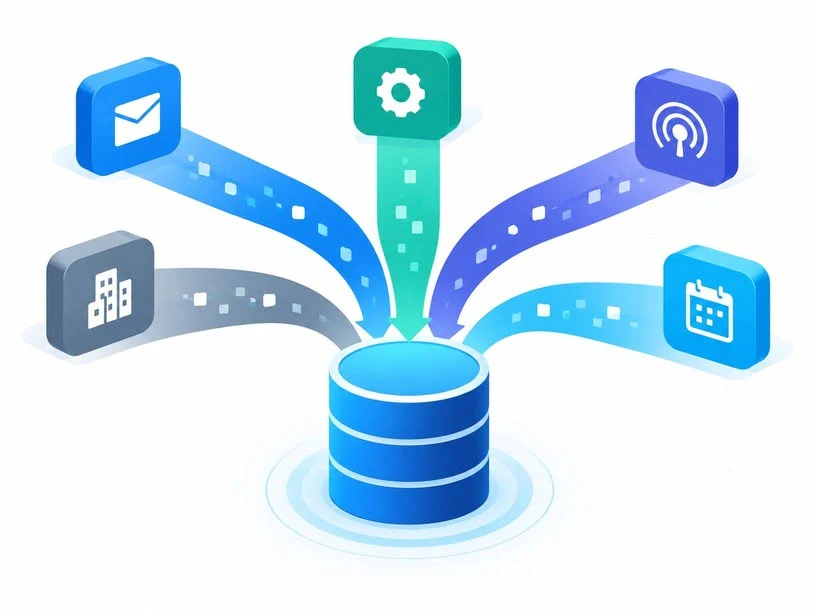
Most b2b data providers bundle several data types into one platform. Understanding each one helps you evaluate what you’re actually paying for:
- Contact data verified business emails, direct-dial and mobile phone numbers, job titles, and seniority level.
- Firmographic data company size, industry, revenue, headquarters location, and funding stage.
- Technographic data which software and platforms a company already uses, useful for competitive displacement plays.
- Intent data behavioral signals showing a company is actively researching a category, gathered from review-site activity, content consumption, and search behavior.
- Trigger events funding rounds, leadership changes, and hiring surges that signal a buying window is opening.
A provider that only sells one of these (a narrow list provider) is cheaper but limited. A full B2B sales intelligence platform bundles several, which usually costs more but reduces the number of tools your team has to stitch together.
Types of B2B Data Providers
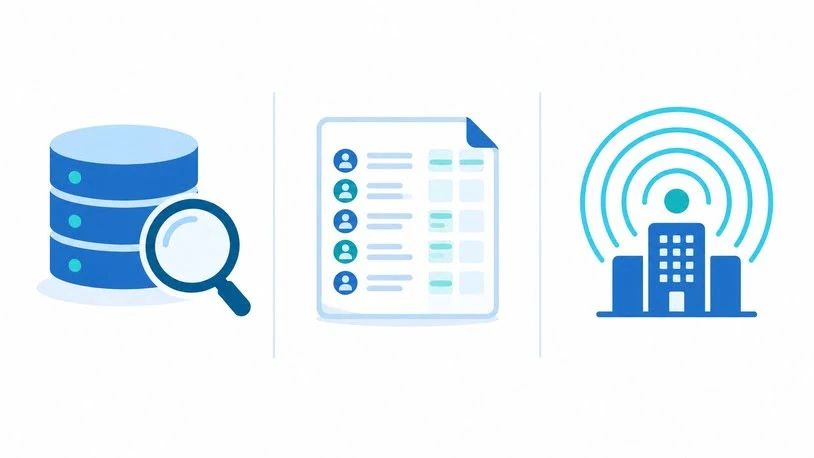
Contact and Sales Intelligence Platforms
These are the largest, most searchable business contact databases Apollo.io, ZoomInfo, Cognism, Lusha, and Seamless.AI fall here. You search by filters (title, industry, headcount) and pull contacts on demand, often with a browser extension for LinkedIn prospecting. Database size and refresh frequency matter more than raw contact count, since stale records cause bounced emails.
B2B Data List Providers
A b2b data list provider builds a static, one-time list to your spec rather than giving you ongoing platform access. This model suits a single campaign and market-entry push but has no built-in way to keep records current, so accuracy decays fast plans to re-verify and re-purchase every few months.
Intent Data Providers
Instead of names and numbers, these providers sell a signal: “Company X is researching solutions in your category right now.” This is the layer most useful for identifying in-market B2B buyers before a cold list ever enters the picture see the dedicated comparison further down.
Best B2B Data Providers
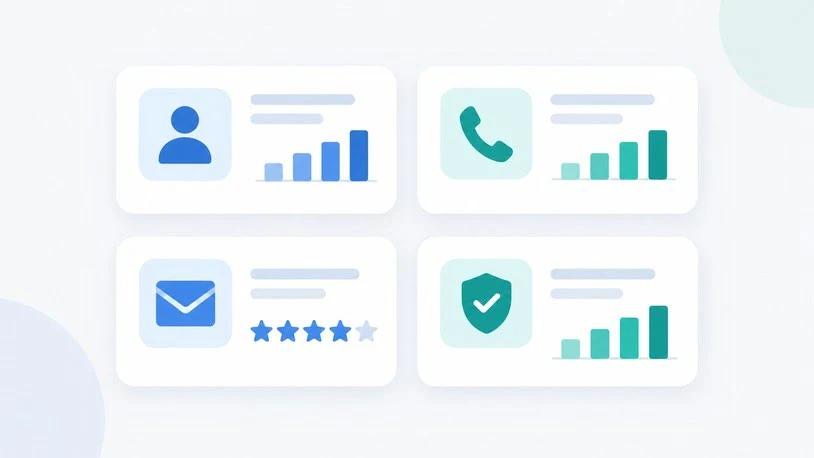
There’s no single “best” B2B data provider; the right one depends on whether you need volume, compliance documentation, and intent signals layered on top of contacts. Here’s how the leading contact-data platforms compare:
Apollo.io
- Best for: Teams that want prospecting data and outreach automation in one platform
- Key data types: Contact data, firmographic filters, engagement and sequencing signals
- Main strengths: Large searchable database, built-in email sequencing, accessible entry-level pricing
- Potential limitations: International coverage outside North America is generally reported as thinner than EU-focused competitors verify against your specific target regions before committing
- Pricing approach: Seat-based tiers with a free plan, scaling with contact credits and add-on features
- Ideal customer: Startups and mid-market teams that want data plus outreach without stitching together separate tools
ZoomInfo
- Best for: Enterprise revenue teams that want deep contact, technographic, and intent data in one contract
- Key data types: Contact data, technographics, trigger events (“Scoops”), and its own buyer-intent product, supplemented by integrations with G2 Buyer Intent and TrustRadius intent data
- Main strengths: Broad company and contact coverage, strong technographic and trigger-event data, native intent layer
- Potential limitations: Generally the highest-cost option in this category and typically sold on an annual contract rather than month-to-month
- Pricing approach: Custom enterprise quotes rather than published self-serve pricing
- Ideal customer: Larger sales and marketing organizations consolidating multiple data vendors into one platform
Cognism
- Best for: Teams prospecting into Europe/EMEA that need phone-verified, GDPR-documented data
- Key data types: Contact data with an emphasis on phone-verified mobile numbers, plus company-level filters
- Main strengths: GDPR consent documentation and strong European mobile-number coverage
- Potential limitations: Typically priced at a premium relative to contact-only alternatives, usually sold on annual contract
- Pricing approach: Custom quotes, generally positioned above budget contact tools
- Ideal customer: International and EU-focused sales teams for whom compliance documentation is a hard requirement
Lusha
- Best for: Individual reps and small teams needing quick, on-demand contact lookups
- Key data types: Contact data (email, direct dial) via browser extension and platform search
- Main strengths: Ease of use, fast lookups, lower entry price point
- Potential limitations: Smaller database and fewer advanced ABM and intent features than full sales-intelligence suites
- Pricing approach: Credit-based plans with a free tier
- Ideal customer: SDRs, recruiters, and small teams that need quick lookups rather than a full go-to-market data platform
How to Choose the Right B2B Data Provider
Weigh any provider against five criteria before signing a contract: accuracy and refresh rate, coverage of your actual target market, compliance documentation, integration with your existing stack, and pricing model fit for your outreach volume. Credit-based pricing punishes high-volume prospecting; unlimited and seat-based pricing suits teams that pull data constantly.
B2B Data Provider Evaluation Checklist

Turn those criteria into concrete questions for any vendor demo and trial:
- Email verification methodology ask how addresses are validated, not just how often they’re refreshed
- Phone-number accuracy confirm whether mobile numbers are human-verified or algorithmically inferred
- Data refresh frequency find out how often records are re-checked against source data
- Geographic coverage check depth in your specific target regions, not just a global total
- Industry coverage check depth in your vertical specifically, not just overall company count
- Intent-signal methodology ask exactly what behavior triggers a signal and where it’s sourced from
- CRM integrations confirm native, two-way sync with your CRM and sales-engagement tool
- API availability needed if you plan to enrich records programmatically rather than export manually
- GDPR/CCPA documentation request the provider’s documented consent basis, not just a compliance claim
- Pricing and credit limitations clarify what counts against your credits (a search, a reveal, and an export)
- Free trial/demo availability test data accuracy against your own existing list before committing to a contract
Best Intent Data Providers for Identifying In-Market B2B Buyers

If your goal is specifically to find companies that are already in-market rather than just building a cold list intent data is the layer that matters most. The leading options differ mainly in where their signal comes from and how it’s priced:
| Provider | Signal source | Best for | Pricing approach |
| Bombora | Content consumption aggregated across a large B2B publisher co-op | Broad, category-level intent across many topics | Custom quote, sold as a standalone data feed and platform |
| G2 Buyer Intent | Review-site research and vendor-comparison activity | High-intent SaaS buyers actively comparing vendors | Custom quote, often bundled with a G2 profile/marketing package |
| TrustRadius | Review-site research; integrates directly into ZoomInfo Sales | SaaS buyers researching specifically on TrustRadius | Custom quote, available standalone and via the ZoomInfo integration |
| 6sense | Predictive modeling on first- and third-party behavioral signals | Account-based marketing programs | Custom enterprise quote |
| Demandbase | Keyword, firmographic, and behavioral signals combined | ABM teams wanting intent tied to ad targeting | Custom enterprise quote |
| ZoomInfo | Proprietary buyer-intent data plus G2 and TrustRadius integrations | Teams wanting contact data and intent in one contract | Custom enterprise quote |
No single signal source catches every buyer, so many teams layer two providers: a broad content-based source like Bombora alongside a review-site source like G2 or TrustRadius to cross-verify which accounts are genuinely in-market.
A note on the details above: vendor pricing, data-source methodology, and partnership integrations change frequently and vary by plan and region. Treat these as general market positioning rather than confirmed quotes, and verify current specifics directly with each provider before purchasing.
A b2b data provider is only as useful as the fit between what it sells and what your team actually needs. Teams doing high-volume cold outreach need a large, accurate B2B lead database; teams doing account-based marketing need intent signals more than raw contact volume; and teams running a single targeted campaign may only need a one-time b2b data list. Match the provider type to the job before comparing price, and re-check accuracy and compliance on a recurring basis data decays, and yesterday’s verified contact is tomorrow’s bounce.
Related Reading
Add internal links to your own related pages before publishing for example, guides on B2B intent data, sales intelligence software, lead generation, CRM data enrichment, and sales prospecting.
FAQ
What is the difference between a B2B data provider and a B2B data list provider? A b2b data provider typically gives ongoing, searchable access to a live database you can query anytime. A b2b data list provider instead delivers a fixed, one-time list built to your specifications, which is cheaper for a single campaign but goes stale faster since there’s no continuous re-verification.
How accurate is B2B contact data usually? Accuracy varies by provider and record type, but even top platforms see email and phone data decay within months as people change jobs. That’s why refresh frequency matters more than raw database size when comparing providers.
Can I combine a contact data provider with an intent data provider? Yes, and many sales teams do exactly this using a contact platform like Apollo.io and ZoomInfo to build the list, and an intent provider like Bombora, G2, and TrustRadius to prioritize which accounts on that list to contact first.
Is intent data the same as firmographic data? No. Firmographic data describes a company’s static attributes (industry, size, revenue). Intent data describes behavior specifically, signals that a company is actively researching a purchase right now.
Do B2B data providers comply with GDPR and CCPA? Reputable providers document their consent basis for collecting contact data and offer opt-out mechanisms, but compliance practices differ by vendor and by region. Always confirm a provider’s data-sourcing and consent documentation before purchasing, particularly for EU and California contacts.
What should a small business look for in a B2B data provider? Smaller teams typically get more value from a contact-data platform with flexible, low-commitment pricing than from an enterprise intent-data suite, since intent tools pay off most at higher outreach volume and with dedicated ABM programs.

James Anderson is a sales professional focused on helping businesses improve their sales process and achieve better results. He is experienced in using sales tool to manage leads track customer interactions identify opportunities and support business growth. William values clear communication strong customer relationships and efficient sales strategies.