
A closing cost calculator for sellers estimates the total fees and expenses you pay when your home sale closes based on your expected sale price mortgage payoff and local costs it gives you a realistic picture of your net proceeds before you sign a listing agreement and accept and offer.
What a Seller Closing Cost Calculator Actually Calculates
The calculator takes your estimated sale price and subtracts the costs tied to selling, producing an estimate of what you’ll walk away with after closing. Most calculators ask for:
- Expected and listed sale price
- Remaining mortgage balance payoff amount
- Real estate agent commission rate
- Estimated transfer taxes and recording fees
- Any seller concessions to the buyer
- Outstanding liens HOA dues, and property tax prorations
The result is an estimated net proceeds figure along with a breakdown of each cost category so you can see where your money is going.
Main Costs Included in the Estimate
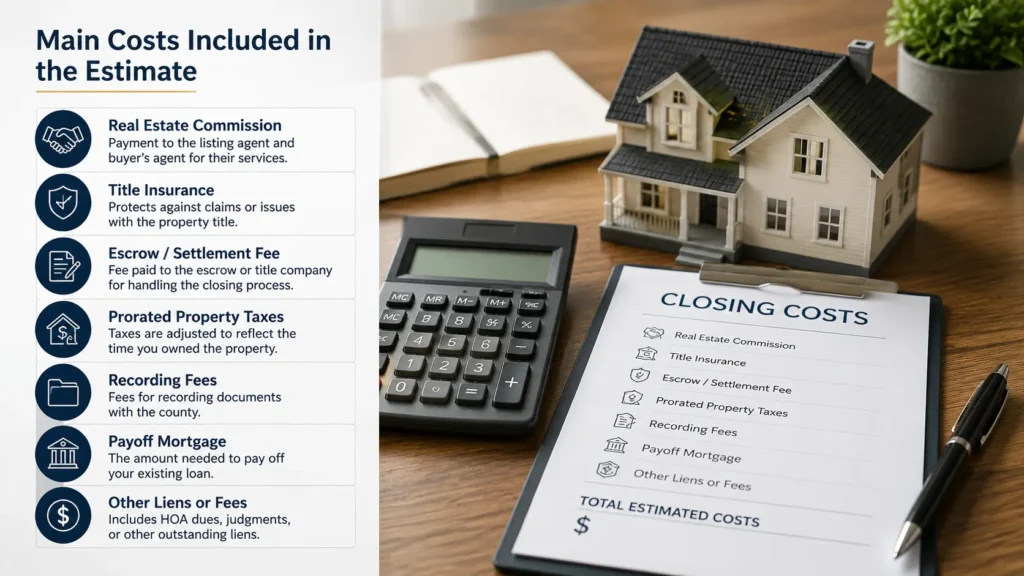
Real estate agent commissions are typically the largest expense historically split between the listing agent and buyer’s agent. Commission structures have become more negotiable in recent years so the rate you enter should reflect what you’ve actually agreed with your agent rather than a fixed assumption.
Beyond commission sellers commonly pay:
- Transfer taxes and recording fees set by the state and county and based on sale price
- Title-related fees such as a portion of title insurance and settlement fees depending on local custom
- Attorney fees required in some states for closing
- Prorated property taxes and HOA dues covering the seller’s portion of the year up to closing
- Mortgage payoff costs including any prepayment penalty and accrued interest
- Buyer concessions repair credits and closing cost assistance negotiated during the sale
Because these costs vary significantly by state county and even municipality a calculator can only provide an estimated final figure from your closing disclosure.
Typical Range of Seller Closing Costs
Sellers generally pay total closing costs in the range of 6% to 10% of the home’s sale price, with agent commission usually accounting for the largest portion. Excluding commission closing costs alone (taxes, title fees and administrative charges) often fall closer to 1% to 3% of the sale price. These are general ranges not guarantees your actual costs depend on your location loan payoff and any concessions you offer the buyer.
How to Get an Accurate Estimate
- Enter your realistic sale price based on a comparative market analysis rather than your original purchase price and an optimistic guess.
- Confirm your mortgage payoff amount directly with your lender since online balances often exclude accrued interest.
- Use your actual agreed commission rate, not a default percentage the calculator may auto fill.
- Check state specific transfer tax rates since these differ widely and significantly affect the total.
- Account for likely buyer negotiations such as repair credits since these reduce net proceeds even if they aren’t finalized yet.
A calculator gives you a working estimate for planning purposes. Your closing attorney title company and real estate agent can provide a more precise settlement statement once you’re under contract.
FAQs
Does a seller’s closing cost calculator include the mortgage payoff? Yes, most calculators let you enter your remaining mortgage balance so it can be subtracted from your sale price along with other fees, giving you an estimate of your actual net proceeds.
Are seller closing costs different from buyer closing costs? Yes buyers typically pay costs related to their loan, such as origination fees and appraisal costs, while sellers typically pay commission, transfer taxes, and their share of prorated expenses.
Can I lower my closing costs as a seller? You may be able to negotiate your agent’s commission rate, avoid offering buyer concessions and shop around for title services in states where you have that option. Local regulations affect which costs are negotiable.
Why does my calculator estimate differ from my final closing statement? Calculators use general assumptions and average rates. Your final closing disclosure reflects exact fees prorations and any last minute negotiations which can shift the total up and down.

James Anderson is a sales professional focused on helping businesses improve their sales process and achieve better results. He is experienced in using sales tool to manage leads track customer interactions identify opportunities and support business growth. William values clear communication strong customer relationships and efficient sales strategies.